
This article was originally written in Chinese and translated into English by AI.
Preface
Xiao Du is an ordinary undergraduate student.
After the controversy over phone-based classroom interaction during the first week, everything gradually began settling into a routine in week two...
The new semester brought five new courses, so Xiao Du bought several notebooks for taking notes in class.
As the courses progressed, especially in mathematics, Xiao Du discovered that he could not write notes nearly as fast as the teacher spoke. To his surprise, Xiao Lu—the top-ranked student in their year—simply listened and never picked up a pen.
Remembering that Xiao Lu had always behaved this way in class yet “effortlessly” earned excellent grades, Xiao Du fell into thought: does saving or recording information mean that you have truly learned it?

One
Class notes carry a hidden danger: switching off your brain.
There is nothing wrong with recording material that you consider meaningful. But knowledge is not wine: it does not become more valuable the longer it is stored away. We need to take it out, revisit it, and review it regularly.
The Ebbinghaus forgetting curve tells us that people do not forget information at a constant rate. Forgetting is fastest immediately after learning something. One hour later, people retain only 44.2% of the original material, and after one day only 33.7%.
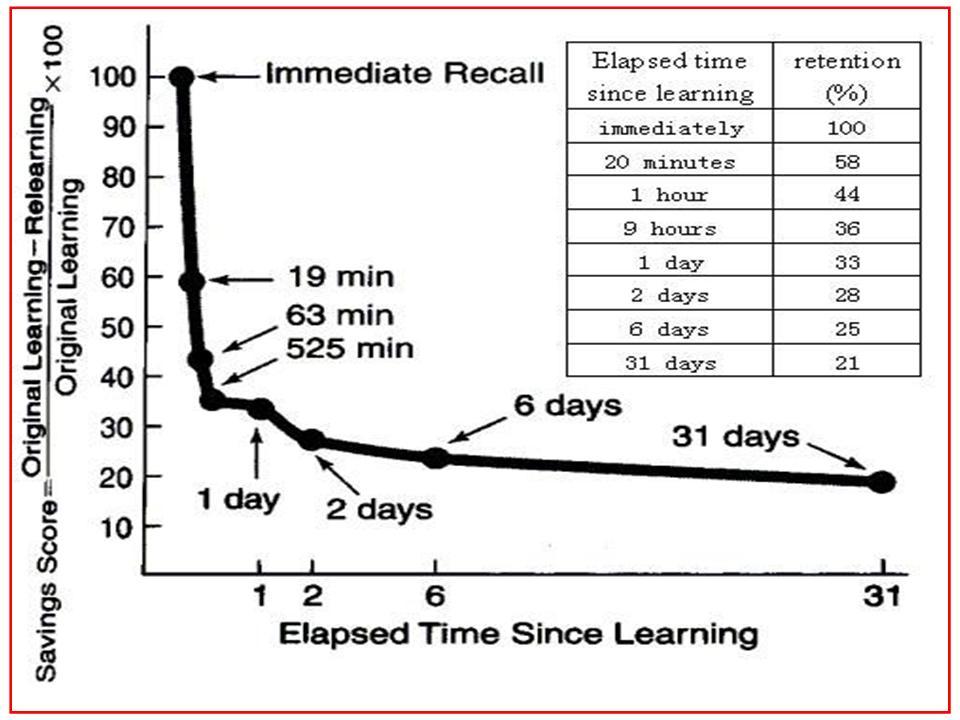
For pure memorization tasks such as learning vocabulary, some therefore recommend reviewing the material 5 minutes, 30 minutes, 12 hours, 1 day, 2 days, 4 days, 7 days, and 15 days after first studying it, helping the information enter long-term memory.
For tasks beyond pure memorization, if review is necessary, reviewing organized key points is more convenient than returning to the original material.
The purpose of class notes is to record a course’s most important points, enabling you to review what you learned quickly later. If the notes merely copy long passages, how is reviewing them any different from rereading the course slides?
Writing by hand may indeed strengthen memory. But if you spend a short period frantically copying everything on the board or screen without time to think, the only thing you are likely to remember is how much your hand hurt.
Often, our “note-taking” merely creates the illusion that we are working hard.

Two
Besides class notes, bookmarking WeChat articles is another similar way of collecting information.
Compared with frantically writing down information in class, saving a WeChat article is effortless. A few taps place apparently valuable content safely into your collection. Most saved articles, however, are ultimately forgotten in the bookmarks list.
Should we take notes in class, then? Should we bookmark good articles when we encounter them?
I believe we should—but in moderation and selectively.
Notes should record only keywords and the logic of an argument, rather than long passages or every individual step in a mathematical derivation.
Bookmarks should be reserved for clear, well-organized articles that you are certain you will revisit. Saving an article merely creates a shortcut for later review. If you keep saving without reading, the collection grows larger and larger. By the time you remember it, the endless list gives you no idea where to begin; you may even have forgotten why you saved the articles at all. The usual outcome is not reading each one, but clearing the entire list.

Three
What, then, is an effective and efficient way to learn? All we can say is that learning methods vary from person to person.
The Canadian writer Scott H. Young wrote a book called Learn More, Study Less, in which he explains his approach to learning.

Beginning in high school, Scott rarely studied after class. He completed all of his schoolwork during class and ranked second in his year. At university, he focused on studying for no more than two hours a day, yet frequently earned A or A+ grades. After graduating, he learned linear algebra in ten days and completed the material and corresponding exams for 33 MIT computer-science courses in one year.
Today, he shares his learning experience through public speaking and his blog.
In Learn More, Study Less, Scott offers many techniques for learning, including remembering through associations and analogies, compressing information, and developing an effective study routine.
He also notes that some methods may be extremely inefficient at first and require continuous practice before they become effective, while others are inherently unsuitable for certain people.

Four
Look through your bookmarked WeChat articles and find the ones you have never opened since saving them. Or think about the notes you take in class or during meetings at work.
Will you review them, or let them remain quietly buried? Make your choice.
The story of Xiao Du in this article is entirely fictional. Any resemblance to reality is inevitable.